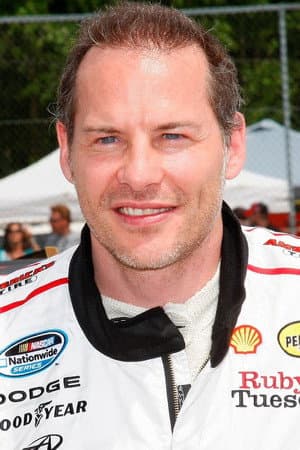
Jacques Villeneuve has spent most of his adult life being asked what his father would have made of things. The question arrives at every autograph session, every Grand Prix weekend, every anniversary of that grim spring weekend in Belgium in 1982. Now it comes attached to a new sports biopic about Gilles Villeneuve, and the 1997 Formula One world champion has given his blessing - cautiously.
"I watched it as a son, not as a racing fan," Jacques Villeneuve said in an exclusive clip from the film's promotional material. "That is a difficult seat to sit in."
The Canadian, now in his mid-fifties, was eleven years old when his father died following a qualifying crash at Zolder on May 8, 1982. Gilles Villeneuve was thirty-two. He had won six grands prix, none of them a world championship, and yet the ferocity of his driving - the sliding, the contact, the refusal to lift - made him the most romantic figure in the sport's modern history. The new film attempts to capture that, and Jacques Villeneuve's reaction to it forms the emotional spine of the project's rollout.
A Son's Assessment, Not a Historian's
In the clip, Jacques Villeneuve is careful to separate the man from the myth. He notes that audiences arriving for spectacle will find it, but that the quieter material - the family life, the sacrifices, the long winters in Berthierville, Quebec - is what he recognized.
"It is strange to hear strangers explain your father to you," he says. "But they got the important thing right. He was not a strategist. He was a man who drove on instinct, and instinct is not something you can teach or fake."
That distinction matters. Gilles Villeneuve's legend rests less on silverware than on individual afternoons: the wheel-to-wheel duel with René Arnoux at Dijon in 1979, widely regarded as one of the finest battles in the sport's history; the wet-weather mastery at Watkins Glen; the lap times he could extract from machinery that others found undriveable. He finished runner-up in the 1979 championship to Jody Scheckter, his Ferrari teammate, and never came that close again.
Jacques Villeneuve, who left for Europe as a teenager and clawed his way up through the junior categories without his father's name opening doors, has always been ambivalent about the shadow. He won the Indy 500, the CART title, and the Formula One crown with Williams. He knows better than most how a surname can both propel and imprison.
Why the Story Still Resonates
More than four decades on, Gilles Villeneuve remains a touchstone because his career sits at the boundary between two eras of the sport - before and after the fixation with safety that followed the deaths of several drivers in the early 1980s, including Villeneuve's own. His death accelerated changes to car design, circuit standards, and medical response that reshaped Formula One permanently.
The film arrives in a period of renewed appetite for motorsport drama, with documentaries and scripted projects mining the sport's history for personalities rather than results. Villeneuve fits that brief almost perfectly: a small-town Quebecois snowmobile racer who talked his way into Formula One and drove as though the brakes were optional.
Jacques Villeneuve does not pretend the film is a documentary. He calls it an interpretation, and says he accepts that any dramatization will smooth some edges and sharpen others.
"My father belongs to a lot of people," he says. "To me he belongs to one family. Those two things have to live together."
What the Clip Reveals
The exclusive clip focuses on Jacques watching a sequence depicting his father's arrival in Formula One, and later a quieter scene set at the family home. His face does most of the work. At one point he laughs; at another he goes still for a long moment and simply nods.
He does not offer a verdict on the film's accuracy in the clip, and the promotional material does not present his remarks as an endorsement of specific events. He speaks instead about tone and spirit - about whether the man on screen feels like the man he remembers.
"There was always noise around him," he says. "Engines, people, pressure. But at home there was calm. If the film keeps those two things apart, it works."
The clip ends with him stepping away from the screen, hands in his pockets, and saying he needs a moment. It is the most revealing footage in the promotional package, and it is not about racing at all.
For Hollywood, the takeaway is simple: the most credible voice attached to this project is not a critic or a historian but a son, and he has chosen to speak with care rather than certainty. Whether audiences respond to that restraint is now the film's problem, not his.
Source: Hollywood Reporter