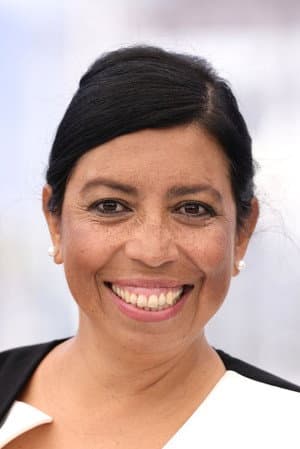
The International Documentary Film Festival Amsterdam will turn its annual spotlight on two filmmakers whose bodies of work have reshaped how non-fiction cinema is made and understood, festival organizers announced. Mexican director Tatiana Huezo will be the subject of this year's retrospective program, while the festival's heritage sidebar will center on the late American filmmaker William Greaves, a pioneer whose experiments with form continue to influence documentarians decades after his death.
The twin tributes place IDFA, long regarded as the world's foremost showcase for documentary art, in the familiar position of arguing for a canon. By pairing Huezo, one of the most acclaimed documentarians working today, with Greaves, whose career stretched from the postwar years into the 2000s, the festival draws a line between contemporary practice and a legacy that many younger filmmakers are still discovering.
A Retrospective for Tatiana Huezo
Huezo has built a reputation for films that sit at the boundary between documentary and narrative, often following families and communities through upheaval with a patience that borders on the devotional. Her work has been a fixture at major international festivals, and she has moved between documentary and fiction without ever abandoning the observational rigor that defines her non-fiction. A full retrospective at IDFA gives audiences the chance to trace that trajectory in one place, from her earliest shorts through her most recent features.
What distinguishes Huezo is her refusal to treat subjects as case studies. Her camera tends to linger, allowing silence and mundane detail to carry as much weight as testimony. That approach has earned her a devoted following among programmers and critics, and it has made her a touchstone for discussions about ethics, authorship, and the emotional responsibilities of the documentary form. IDFA's decision to celebrate her now reads as both a coronation and a provocation, an invitation to consider where documentary is heading by examining one of its most searching practitioners.
William Greaves and the Archive
Greaves occupies a different but equally vital place in the history of the form. An actor, editor, producer, and director, he worked across television, government filmmaking, and independent production, and he is perhaps best remembered for a single, endlessly discussed experiment in which he turned the camera on the process of filmmaking itself. That film's playful interrogation of truth, performance, and race has aged into one of the most cited works in the avant-garde documentary tradition.
The spotlight on Greaves is not merely a history lesson. His career illustrates how much of documentary's institutional history runs through public broadcasting, educational film, and community media, spaces that are often overlooked when the canon is assembled. By giving him a prominent platform, IDFA signals an interest in the infrastructure of the form as much as its auteurs.
Why This Pairing Matters
Putting Huezo and Greaves side by side is more than a curatorial convenience. Both filmmakers treat the act of looking as a subject in itself, and both have resisted the pressure to make films that explain themselves too neatly. Where Greaves used reflexivity and humor to dismantle the authority of the camera, Huezo uses intimacy and duration to rebuild it on different terms. Together they map a range of possibilities for non-fiction that the festival circuit does not always make room for.
IDFA has increasingly used its retrospective and heritage sections to shape conversations that extend beyond the annual rush of premieres. The choice of these two filmmakers suggests an interest in work that rewards repeated viewing and that holds up under sustained critical attention, rather than films whose value is exhausted by a single festival run.
What to Watch For
The full lineup of titles included in each program has yet to be detailed, and organizers are expected to announce screenings, talks, and archival presentations in the weeks ahead. For now, the announcement alone is enough to mark IDFA as a festival still willing to invest in the long view, honoring a contemporary filmmaker at the height of her powers while returning a foundational figure to the center of the conversation. Whether audiences treat the pairing as a history lesson, a discovery, or an argument, it is the kind of programming that only a festival of this scale can mount, and it will likely be one of the more discussed corners of this year's edition.
Source: Hollywood Reporter